
Creative Before Technology: Designing Interactive Experiences That Put People First
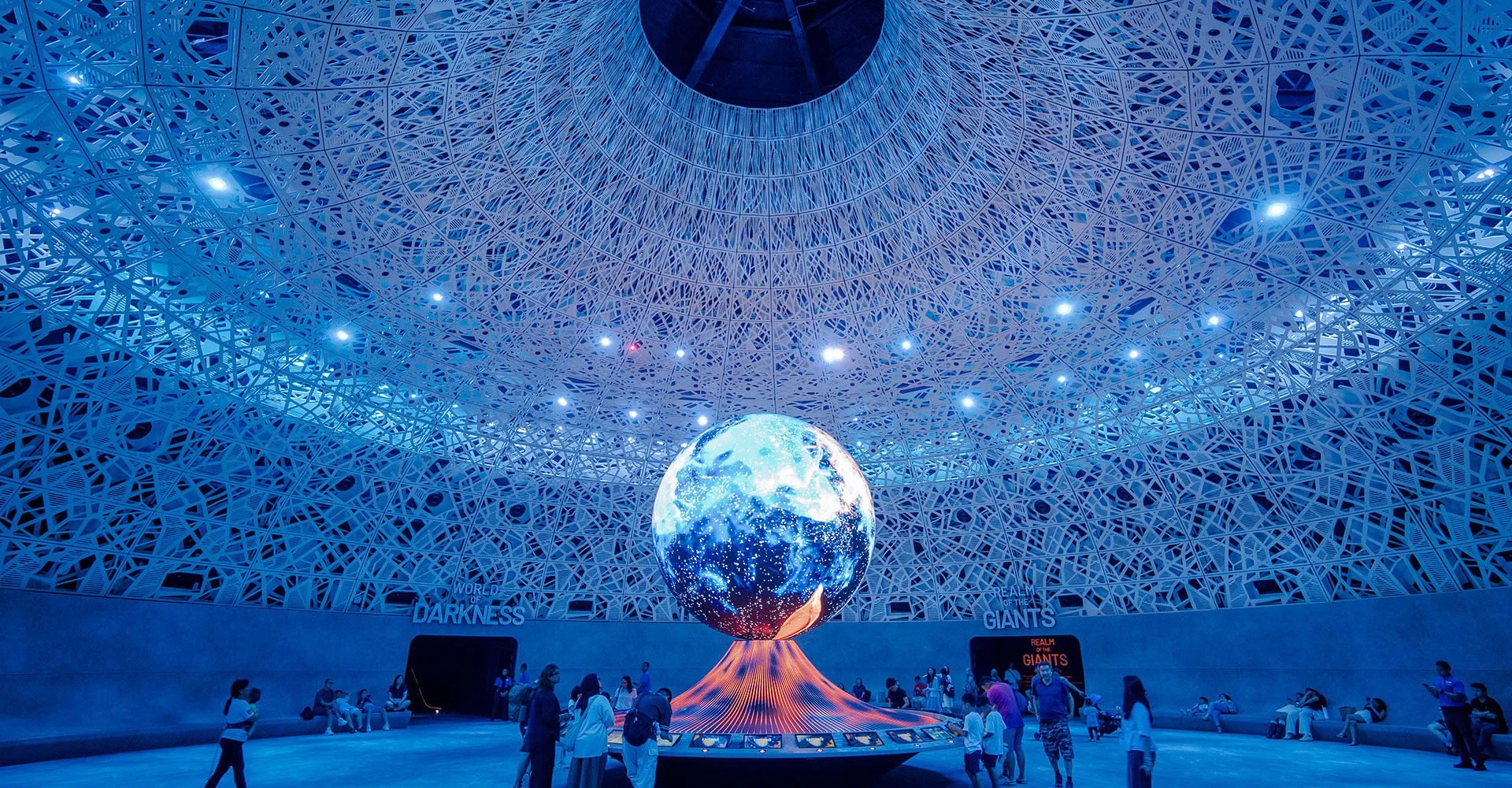
MANDIa exploria 87 installations designed and produced by Dpt.
Technology has transformed what’s possible in experiential marketing. AI, projection mapping, spatial audio, mixed reality, computer vision, RFID, and sensor-driven environments are opening the door to experiences that would have seemed impossible just a few years ago.
But technology isn’t the experience.
It’s the tool that helps bring a creative idea to life.
At Rep & Repeat, we believe the best technology is almost invisible. It’s the little bit of magic behind the curtain. Guests shouldn’t leave talking about the RFID tag, the motion sensor, or the AI model. They should leave talking about how the experience made them feel.
If people are more interested in figuring out how something worked than engaging with why it existed, we’ve probably missed the mark.
Start with the experience, not the technology
One of the biggest mistakes brands make is starting with a piece of technology instead of a creative objective.
“We want to use AI.”
“We want projection mapping.”
“We want a touchscreen.”
Those aren’t creative briefs.
A stronger brief sounds like this:
We want guests to feel curious.
We want people to discover something.
We want attendees to become part of the story.
We want strangers to interact with one another.
Once the desired experience is defined, creative technologists can determine the right tools to bring it to life.
Technology shouldn’t dictate the experience. The experience should dictate the technology.
Technology should remove friction, not create it
The most successful interactive experiences feel intuitive.
Guests shouldn’t need instructions.
They shouldn’t wonder where to stand, what to press, or what happens next.
The interaction should feel natural.
That philosophy is becoming increasingly important as experiential technology evolves. Rather than adding more interfaces, the industry is moving toward environments that respond naturally through AI, sensors, gesture recognition, and contextual awareness. The goal is reducing friction so people focus on the experience rather than learning the technology.
Whether someone is six years old or sixty-five, they should immediately understand how to participate.
Good interaction design feels effortless.
Design for people, not just one person
One consideration that’s often overlooked is throughput.
An activation may look incredible in a rendering, but if only one person can experience it every five minutes, it quickly becomes frustrating.
Great interactive experiences are designed to be:
Accessible to a broad audience
Easy to understand
Fast enough to keep lines moving
Structured with a clear beginning and end
A defined ending matters.
When guests instinctively know the experience is complete, they naturally move on, allowing someone else to participate. That keeps energy high and prevents activations from becoming bottlenecks.
Great experiential design isn’t just about individual engagement. It’s about creating an experience that works beautifully for hundreds or even thousands of guests.
Choosing the right technology
Every technology has strengths.
The goal isn’t to use the newest tool. It’s to choose the one that best supports the creative idea.
Some of the technologies we’re most excited about include:
Artificial Intelligence
AI is making real-time personalization possible in ways that weren’t practical before.
Instead of every guest having the exact same experience, AI can adapt content, recommendations, visuals, or takeaways based on individual participation, making experiences feel more personal without increasing operational complexity. Industry trends point toward AI moving beyond novelty and becoming a way to create tailored experiences at scale.
Projection Mapping
Projection mapping continues to create memorable shared moments, especially when paired with motion tracking or sensors that allow guests to influence what happens around them.
Instead of simply watching content, people become part of it.
RFID and NFC
These technologies are often most valuable because they’re almost invisible.
Guests may never realize RFID is quietly enabling personalized content, tracking progress through an activation, or unlocking experiences behind the scenes.
Sometimes the best technology is the technology nobody notices.
AR and Mixed Reality
Augmented and mixed reality work best when they blur the line between the physical and digital worlds.
Rather than replacing reality, they add a layer of wonder that invites people to see familiar environments in entirely new ways.
Spatial Audio
One area I’m particularly excited about is spatialized audio.
Experiential marketing is often designed visually, but sound has enormous storytelling potential.
Spatial audio can guide guests through a space, build anticipation, create intimacy, and transform an environment without adding another screen. As brands continue embracing multi-sensory design, sound is becoming an increasingly powerful way to deepen emotional engagement.
Not every trend deserves attention
Every few years the industry gravitates toward a new piece of technology simply because it’s available.
The technology isn’t the problem.
The way it’s used often is.
For example, passive touchscreens have become commonplace.
A touchscreen that simply asks someone to tap through information rarely creates a memorable experience. In many cases, it functions more like a digital brochure than an interactive moment.
That doesn’t mean touchscreens should disappear.
It means interaction should feel purposeful.
Technology should encourage participation, curiosity, or discovery—not simply replace printed information.
Leave enough time
One of the most practical lessons we’ve learned has nothing to do with creativity.
Interactive technology needs time.
Hardware needs testing.
Software needs refinement.
Sensors need calibration.
User flows need to be observed.
The most successful technology experiences aren’t successful because they were built quickly. They’re successful because there was enough time to test, refine, and improve them before guests ever arrived.
The future of experiential technology
The industry is moving away from asking people to interact with technology and toward environments that respond naturally to people.
We’ll see more AI-powered personalization.
More responsive environments.
More computer vision.
More sensor-driven interactions.
More experiences that adapt in real time.
Ironically, as technology becomes more sophisticated, it will likely become less visible.
That’s a good thing.
Because the goal was never to impress people with technology.
It was always to create experiences they’ll remember.
Final Thought
At Rep & Repeat, we work with innovative creative technologists who stay at the forefront of emerging technology. But what excites us most isn’t the technology itself—it’s what that technology makes possible.
The best experiential activations don’t start with a device or a platform.
They start with a story.
The technology simply helps tell it.